
Innovative Weather Station Project Enhances Air Quality Monitoring
Key Takeaways
- The project utilizes ESP32-P4 technology for effective monitoring.
- It integrates various sensors for real-time air quality data.
- Users can access weather forecasts via multiple APIs.
- No cloud services or user accounts are necessary.
- Designed for easy replication with off-the-shelf components.
Introduction
In an age of increasing environmental concerns, monitoring air quality has become more important than ever. A recent project by inventor Harald Kreuzer showcases a DIY weather station that combines a user-friendly interface with advanced monitoring capabilities. Utilizing the ESP32-P4 microcontroller, this innovative setup not only tracks various atmospheric parameters but also connects seamlessly to multiple sensor types, providing comprehensive environmental insights right at your fingertips.
Understanding the Project's Core Features
This weather station stands out for its simplicity and effectiveness. Below are the critical elements that define its unique capabilities:
Comprehensive Sensor Integration
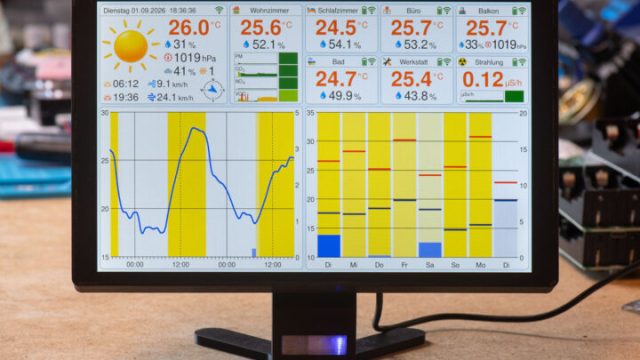
At the heart of the project is the Sensirion SEN66 sensor, which measures particulate matter, carbon dioxide (CO2), volatile organic compounds (VOCs), and nitrogen oxides (NOX). These readings are crucial for communities, especially in urban areas like Jakarta and Surabaya, where air pollution can reach hazardous levels.
Connectivity and Data Access
One of the major advantages of this DIY weather station is its ability to connect with wireless LoRa and ESP-NOW sensors. This feature allows for long-range communication, crucial for extensive monitoring across wide areas. Furthermore, users can fetch weather forecasts through popular APIs like Open-Meteo and OpenWeatherMap, making it a versatile tool for environmental monitoring.
User-Friendly Dashboard
The project includes a 10.1-inch display that presents real-time data in an intuitive format. This makes it easier for users to interpret complex data quickly, which is particularly beneficial for educators and environmentalists working within Southeast Asia's diverse ecosystems.
Why This Project Matters Now
As global temperatures rise and urban areas face heightened pollution, tools like this weather station become invaluable. The increased interest in environmental awareness and health safety drives the need for accessible monitoring solutions. Projects like Kreuzer's offer a practical response to these issues by enabling individuals and communities to take charge of their environmental data.
Impacts on the Indonesian Market
The Indonesian market, with its rapidly industrializing cities, stands to benefit significantly from such innovations. As the need for air quality monitors grows, local governments and organizations can invest in similar DIY projects to ensure the health of their communities. The relatively low cost of materials and ease of assembly make this project an attractive option for schools and NGOs across Indonesia.
Community Involvement and Future Prospects
Encouraging community members to replicate this DIY weather station can foster greater environmental awareness. By engaging locals in the assembly and operation of the station, community members can gain a better understanding of air quality issues and their implications. Moreover, sharing data collected from these stations can help drive policy changes and promote healthier living conditions.
Conclusion
The ESP32-P4 weather station represents a significant step forward in grassroots environmental monitoring. By offering a DIY solution for tracking air quality and weather conditions, it empowers individuals and communities to take control of their health and environment. As interest in such projects grows, the potential for positive change in urban landscapes, especially in Southeast Asia, becomes increasingly realistic.

