
Warsh's Commitment to Curb Inflation Sparks Market Reactions
Key Takeaways
- Warsh's goal is to stabilize inflation at 2%, a significant benchmark.
- Market analysts predict a potential rise in interest rates next month.
- Increased market volatility likely as traders reassess economic forecasts.
- Southeast Asian markets, notably Indonesia, may feel the ripple effects.
- Consumer sentiment could be impacted by shifting economic policies.
Warsh's Inflation Target and Its Implications
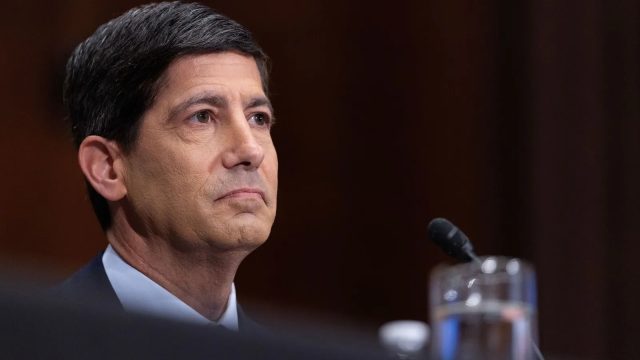
Kevin Warsh, a prominent figure in economic circles and former member of the Federal Reserve Board, recently reiterated his commitment to achieving a targeted inflation rate of 2%. As inflation rates have hovered significantly above this mark, Warsh's comments have reignited discussions on the Federal Reserve's monetary policy moving forward. The urgency of these discussions is palpable as the U.S. grapples with rising costs that affect consumers across the board, from the grocery store to real estate.
This renewed focus on inflation comes at a crucial time. Futures traders have reacted swiftly to Warsh's statements, adjusting their expectations for the Federal Reserve's next policy move. The consensus is building around the idea that a rate hike may be on the horizon in the coming months, which would have profound implications for borrowing costs and market dynamics.
Market Reactions and Predictions
Since Warsh's remarks, analysts have observed a noticeable shift in market sentiments. Speculation around higher interest rates has led to increased volatility in stock and bond markets. Investors are now recalibrating their strategies, indicating a more cautious approach as they navigate this landscape. The possibility of a rate hike means that consumer loans, mortgages, and other forms of credit could become more expensive, affecting overall spending and investment.
The Broader Economic Context
Understanding Warsh's inflation target requires a look at the broader economic context, especially in Southeast Asia, where countries like Indonesia are closely linked to U.S. monetary policies. The Indonesian market, with its growing consumer base and increasing foreign investment, is particularly vulnerable to changes in global interest rates. As the Federal Reserve moves to combat inflation, the ripple effects could be felt across ASEAN nations.
For instance, in major urban centers such as Jakarta, Surabaya, and Bali, rising interest rates could dampen consumer spending and affect real estate prices. Moreover, the interplay between inflation control measures in the U.S. and the economic policies in these Southeast Asian markets is becoming a focal point for investors looking to gauge the stability and growth potential of the region.
Impact on Consumer Behavior
Warsh's commitment could ultimately lead to changed consumer behavior, particularly in sectors sensitive to interest rate fluctuations. As borrowing costs rise, businesses may delay expansion plans, and consumers might keep their wallets closed more tightly. This shift could slow down economic recovery and development in Indonesia and similar markets.
Conclusion: What’s Next for Investors?
As Warsh's statements continue to influence market dynamics, investors must stay informed about potential changes in monetary policy. The commitment to 2% inflation signals a proactive approach from the Federal Reserve, but it may also indicate that strategic adjustments are necessary in investment strategies. For those interested in the financial markets, including sectors such as real money casino free play, the implications of these economic shifts may become increasingly relevant.
Investors in Southeast Asia, particularly in Indonesia, should monitor both U.S. economic policies and local market trends to make informed decisions that maximize returns while mitigating risks. Keeping an eye on the klik365 login for real-time updates could prove beneficial in navigating these changes.
